Showing posts with label Womens fitness. Show all posts

Sunday, 23 August 2015

Health of Women


We wonder what are the main health concerns for women, some call it breast but some name ovarian cancer for instance but statistically it is proved that heart issues are the most frequent in women. Of course, living style and individual’s approach to life play a significant role is reducing these threats and risks.

For some, breast health is the most important. There is a way to do self-examining the breast. What is the first thing to do on finding a lump on a breast and what should be done to cure breast pain? Some women may consider cosmetic surgery to be at top of list and of course, with passage of time and depending on individual choices, the priorities and concerns keep changing. Some could be really concerned about their belly fat too. Usual questions are about Kegel exercises if these are really a must. Kegel exercises is another subject but these help strengthening the muscles of pelvic floor muscles. These muscles support the uterus, small intestine, bladder and rectum. One can opt to discreetly do Kegel exercises, some call it muscle training for pelvic floor. It may be done any time. Here are the notes on different health subjects:
Breast health

It starts with awareness of breasts that we should know what a normal breast looks like. Self-examination of breast is necessary as part of awareness. Shape and feeling along breasts change with menstrual cycle. Keep a note of different stages when there is no complain as during the cycle their texture and sensitivity keeps changing at different times.

Many include breast pain and lumps or nipple discharge as part of breast health. The individuals should know what is normal in each case so they may rush to doctor in case of any abnormality. There are common screening procedures and some diagnostic tests required for inquiring into breast health, these are clinical breast exams, breast ultrasounds and mammograms etc.

A patient might be considering breast augmentation or reduction of breast then try understanding the surgical process. Try to know details how an individual may be declared a patient, what is surgery procedure and what can be the possible complications if a stage arises.
Stages of life for women

These stages simply depend on individual’s reproductive cycle. It begins as menstruation starts and ends at the stage of menopause.

Simple biology is important to understand this cycle. Each month there is an egg released from the ovary of a woman during her ovulation. The egg travels down to her fallopian tube. The egg is fertilized in presence of a possible sperm. If this is fertilized, it implants within the lining of her uterus. If it is not fertilized, both the egg as well as the uterus lining is then shed down during menstruation. This process would continue until perimenopause. Here perimenopause is the time as a woman's body starts the natural transition towards menopause.

These stages in women's life are usually marked by show of specific symptoms and signs. These symptoms and signs are menstrual cramps, hot flashes, mood swings and weight gain etc. We should understand that inclination towards healthy lifestyle is always helpful to feel good at all stages of life and individual should understand how and when one should approach the doctor for advice.
health and fitness Women Health Womens fitness

Tuesday, 18 August 2015

Yoga for uterine prolapse


 Bharat Thakur guides you through the practices of this ancient Indian discipline

The uterus is held in the pelvis by muscles and ligaments. When the supporting structures weaken, this leads to uterine prolapse wherein the uterus falls into the vaginal tract. In extreme cases it protrudes externally. Women normally experience pain, bladder infections, discomfort while sitting, etc.

Apart from procedures and surgical intervention for prolapse, doctors recommend weight loss, regular exercise and lifestyle changes. Though yoga cannot cure prolapse, it is one of the best ways to lose weight, strengthen the muscles, and reduce discomfort and stress that comes along with the condition.


CAUSES OF UTERINE PROLAPSE

Damage to the tissues due to obesity, damage during pregnancy, difficult childbirth, lifting and moving heavy equipment, and age could cause uterine prolapse. Essentially, an healthy lifestyle is the root cause.

Practising yoga postures that strengthen and tone the pelvic muscles, applying upward pull on the pelvic organs along with bandhas (neuromuscular locks) is helpful.


YOGA PRACTICES

Begin with basic joint rotation and 12 sun salutations.


Uttanapadasana (One leg pose)

Lie on your back. Raise one leg to 90 degree and hold for 10-15 seconds while breathing normally. Slowly lower the leg. Repeat 2-3 times, with both legs.

Next, alternate and move one leg up and down while keeping it straight. Repeat at least 10 times.

The same routine can also be used at 60 and 45 degrees from the floor.

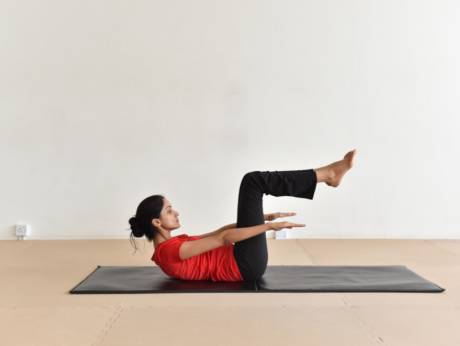
Naukasana (Boat pose)

Raise your legs, arms, shoulders and head off the ground, as shown in the picture. Squeeze your abdomen but breathe normally in the posture. Hold for 10-15 seconds at least. Repeat 2-3 times.


Kandharasana (Shoulder pose)

Bend your knees, keeping your feet apart. This is the starting position. Lift your hip up as you tighten your gluteus muscles. Rise as high as possible, pushing the chest up towards the chin, but keep feet flat on the floor. Hold the posture for as long as it is comfortable and then lower the body to the starting position.


Viprita Karni (Inverted pose)

Lie flat on the back with legs and feet together. Raise the legs together, keeping them straight. Move the legs over the body towards the head. Push down on the arms and hands, raising the buttocks. Use your palms to support your body resting on your elbows as shown. Keep your legs vertical. To lower your body, bend your knees bringing your hip to the floor, and then your feet down.
If you are unable to perform this without support, you can rest your hip against wall.


Halasana (Plough pose)


Follow the same steps as viprita karni but lower your legs towards the head, trying to touch the floor.


BANDHAS

Uddiyan bandh (Abdominal lock)

Sit with your back straight. Place your hands on your thighs and exhale through your mouth. Lock your abdomen as you pull it in and up towards the chest. Hold for 10-20 seconds and release. Repeat three times.

Moolbandh (Perineum lock)

Inhale and hold your breath. Squeeze the lower abdominal area and pelvic floor, and pull upwards. Hold for 10-20 seconds, release and exhale. Practise three times.


Tips:

  • Avoid this regime during menstruation and pregnancy.
  • Avoid inverted postures if you have slipped discs in the cervical region.
  • These postures are best learnt under the guidance of a professional before you attempt to practise on your own.
Source: gulfnews.com/leisure/yoga/yoga-for-uterine-prolapse-1.1565210
Women Health Womens fitness Yoga Yoga practices

Wednesday, 12 August 2015

6 Tips For Exercising Safely In Hot Weather


1. Drink up.

Exercising in hot climate, especially in Doha increases our body temperature. Sure, our bodies have built-in cooling systems that help us adjust to heat. That’s why we perspire. But this natural cooling system can fail if we’re exposed to soaring temperatures for too long. The result may be heat exhaustion – that awful fatigue that makes you feel as if one more step could be your last – and even heat stroke.
If the humidity is also way up, you’re in double trouble because your sweat “sticks” to your skin; it doesn’t evaporate as readily, which can send body temperature even higher.
To keep cool, make sure first of all that you’re drinking plenty of water. Since our bodies are about 50 to 60% water, it is vital to maintain this amount. We tend to lose about 2 to 3% during typical exercise and activity, especially on hot days. Because the Pritikin Eating Plan, full of fruits and vegetables, is so rich in water, you do not need to drink water before your workout, but while you’re exercising, drink 8 to 10 ounces of water every 20 minutes. After exercise, drink more – at minimum, another 8 ounces.
“Another great way to help re-hydrate during a break in physical activity is to eat a piece of fruit, such as an apple or orange, or even carrots or celery sticks,” recommends Scott Danberg, MS, Director of Fitness at the Pritikin Longevity Center + Spa. “The fruit or veggies will also help replace valuable electrolyte loss.”
“How do I know if I’m drinking enough water?”
A good way to know that you’re hydrating properly is by checking the color of your urine. If it’s pale yellow (think lemonade), you’re well hydrated. If it’s darker (heading toward the color of apple juice), drink more.
“But do be aware that some medications and supplements alter the color of urine, so this gauge, while good for many, does not work for everyone. To be safe, do drink the recommended 8 to 10 ounces of water for every 20 minutes of activity,” counsels Scott.
Don’t drink too much
Be careful not to drink too much water, called overhydration. It can lead to a problem called hyponatremia (low blood sodium). The Pritikin Eating Plan provides enough sodium for active individuals and also provides at least half of the water needed. Bottom line: Drink during and after exercise and other physical activities. At other times of the day, drink when thirsty.
Steer clear of sports drinks. They’re loaded with calories.
Sports drinks are not worth the caloric weight. The Pritikin Eating Plan maintains high carbohydrate stores (glycogen). There is no need for additional supplementation.
Sport drinks should only be considered if you’re of ideal body weight and exercising for long duration at high intensities. Even then, it’s a good idea to dilute sport drinks to avoid excessive calorie consumption.
“Eating fruits and vegetables during exercise provides ample electrolytes for the body, even further decreasing the need for high-calorie sport drinks,” assures Scott.

2. Ease up.

If you’re used to working out in cooler climates, take it easy at first. Just accept the fact that you can’t do what you normally do. (This writer personally learned the hard way.) Though I normally breeze through a four-mile run at home on the beach in West Los Angeles, I barely made it through a half-mile stroll in the 103-degree heat of New York City’s Central Park last month. What a shock to realize how much – and how quickly! – the heat and humidity wore me down.
If you normally run, jog or walk. If you’re a brisk walker, slow it down. As your body adapts to the heat, gradually increase the pace and length of your workout. If you have a medical condition and/or take prescription medications, do ask your physician if you need to take any additional precautions.

3. Avoid the hottest part of the day.

Rise early to catch the cool of the morning, or go out at sunset or later. In the heat of midday, take cover under shade. Jump in a pool. Sign up for an aqua-aerobics class.

4. Wear light-colored, lightweight clothing.

Dark colors absorb the heat, which can make you feel as if you’re wrapped in a warm blanket. Heavyweight, tight-fitting clothing will also heat you up. Keep it loose. Keep it light. More air will be able to circulate over your skin, keeping you cool.

5. Eat snacks to maintain energy.

But pick juicy snacks like fruit. The last thing you need in scorching heat are dry snacks like crackers, popcorn, or energy bars that require your body to add water. Plus, dry snacks are often dense with calories, which means they can easily foil weight-loss goals, summer or winter.

6. Know when to say, “I’m going inside.”

Okay, okay, it kills you not to finish your four-mile workout. May we be so blunt as to suggest that it may kill you if you try. Paid heed to the heat. Listen to your body. If you’re feeling any of the following, find air-conditioned comfort fast.
  • Weakness
  • Light-headedness
  • Dizziness
  • Paling of the skin
  • Headache
  • Muscle cramps
  • Nausea or vomiting
  • Rapid heartbeat
“Remember that even a 20-minute workout has positive health effects. It’s the number of days you exercise that matters most. Frequency of days far outweighs the amount of time of any given exercise session,” says Scott.

aerobic exercise bodybuilding dehydration Doha Womens fitness workout

Thursday, 6 August 2015

Coping with Dehydration

The heat waves streaking across the country bring up questions in people's minds about whether they should change their eating and drinking habits in such conditions.


Do our calorie needs change, or does our metabolism increase during the hot summer temps? Well, maybe yes, but probably no. Our bodies are well-tuned to keep things at status quo. If anything, our metabolism may go up when we're cold, as our bodies need to work harder to maintain our temperature (by shivering). In the heat, our bodies actually slow down a bit to try to conserve energy so as not to overheat. But none of this really makes any significant change in our BMR or how many calories our body needs.
What is important to note is that in hot weather your body is prone to dehydration, and this actually can have an effect on your metabolism. In the course of an average day, sweating, breathing, and waste elimination together leach more than 10 cups of water out of your body -- and that's without exercise. If you don't replace what you've lost, you may become dehydrated; your system literally begins to dry out.
Some people say that their appetite decreases when it's hot outside. If that's the case, you should still try to eat small, frequent healthy meals throughout the day. 
The takeaway here: When it's hot outside, drink plenty of water, and don't skip your workout!
When it's super hot outside, try not to exercise during the hottest part of the day, especially if you're exercising outdoors. Early morning and evenings are your best bet. To make sure your body doesn't overheat, monitor your heart rate. Some people invest in a simple heart rate monitor. It's also important to don the appropriate workout attire. Don't wear sweats or heavy clothes while working out when it's hot. Sweating more doesn't help you burn more calories; it just may dehydrate you more. And most important, as I mentioned, stay hydrated!
We're mostly made of water -- on average, it comprises around 60 percent of the human body. Specific components of our bodies are even more watery: muscle tissue is 75 percent water, while blood is 70 percent water. Water aids in the absorption of nutrients from the food we eat, and it helps eliminate waste from the body.
Dehydration lowers your body's energy levels. Because blood is mostly water, when you're dehydrated the volume of your blood diminishes, lowering amounts of oxygen and nutrients that reach your tissues. Recent studies show there's a trickle-down effect on metabolism: Dehydration can slow your system to such an extent that you burn fewer calories than you would otherwise during the course of the day. And dehydration can cause other undesirable symptoms, including headache, dizziness, muscle weakness, and a dry, sticky mouth.
If those negative side effects aren't enough to send you to the faucet to fill a glass, consider that drinking ample water can help maintain a healthy weight. The volume of a glass of water in your belly can make you feel full, and water dilutes sodium levels in your body, combating fluid retention. And if you try drinking a glass of water whenever you feel the urge to snack, you may discover the cause was thirst, not hunger -- thereby staving off nibbling.
To stay well-hydrated, follow these guidelines:
  • Aim for eight to 12 glasses a day. Keep a large glass on your desk to track your daily intake. When I'm working at home, I fill a half-gallon pitcher of water each morning to drink throughout my workday. Some days I drink more!
  • Hydrate more when working out. Consume six to eight ounces of water every 20 minutes when exercising, and then have two eight-ounce glasses afterwards to restore fluids. If you plan to exercise for more than an hour, plan for it in advance -- up water intake before you work out, hydrate well during exercise, and then chug plenty of fluids after the event.
  • Avoid drinking your calories. Sodas and fruit juices may quench your thirst, but they're loaded with sugar. Similarly, sports drinks can pack a calorie punch. Unless you exercise for more than an hour, you can replenish your fluids and nutrients using water and healthy post-workout snacks instead.
  • Watch out for drinks that dehydrate. Sound like an oxymoron? Caffeinated soda, tea, coffee and alcohol all have a diuretic effect, causing fluid loss. If you drink coffee or a cocktail, follow up with an extra water chaser to stay in balance.
If you have a tough time downing enough water, try these strategies:
  • If you dislike the lack of flavor, add herbs like mint or basil, or slices of citrus fruits or cucumber to a pitcher of water. Your next glass will be infused with refreshing taste.
  • Try tea -- hot or iced. It's calorie-free and flavorful. Green tea is another option; its caffeine is surrounded by tannic acid compounds that slow its release into the bloodstream, minimizing its dehydrating effects. Green tea is also a good source of the antioxidant EGCG, which has a mild metabolism-boosting effect. Four cups of green tea per day can kick up your metabolism by 80 calories. Its rich antioxidant reserves are also thought to help combat diseases from Alzheimer's to cancer.
  • If you routinely turn to other beverages once the day is underway, drink a couple of glasses of water right away when you wake up. You'll make up for fluids lost overnight and be well on your way to a hydrated day.
The recipe below is for a refreshing drink that's perfect for spring. Make a jug to keep in your fridge, and you're guaranteed to quaff healthily all day long!
Zinger Green Tea
Packed with antioxidants, this tea is bursting with flavor, too. Fresh lime juice gives it a tangy zing and a wallop of vitamin C. Makes six servings or 1.5 quarts.
Ingredients
6 cups water
1 cup firmly-packed fresh mint leaves
3 green tea bags
1.3 cups agave nectar
1.3 cups fresh lime juice
6 lime slices, for garnish
Instructions:
Bring the water to boil in a three-quart saucepan. Add the mint and tea bags, remove from the heat, and let steep for five minutes. Strain. Stir in the agave and lime juice. Serve hot or iced, garnished with the lime slices.
Mint Factoid: The mint family includes basil, marjoram, oregano, thyme, and rosemary, among others. All are excellent sources of antioxidants. Their leaves have glands containing essential oils, which provide their distinctive flavors.
Nutrient Analysis Per Serving: 43 calories, 0 g protein, 12 g carbohydrates, 0 g total fat, 0 g saturated fat, 0 g monounsaturated fat, 30 mg omega-3s, 2 g fiber, 1 g sugar, 13 mg sodium
So how will you take advantage of the summer heat and make it work for you?
dehydration heat Womens fitness


Copyright © Women's Fitness in Qatar ™ is a registered trademark.

Designed by Templateism . Hosted on Blogger Platform.